8 Signs of Healthy Sperm 2025 Expert Guide to Male Fertility
Fertility challenges affect millions of couples worldwide. For many men, declining sperm quality due to poor lifestyle choices, stress, or
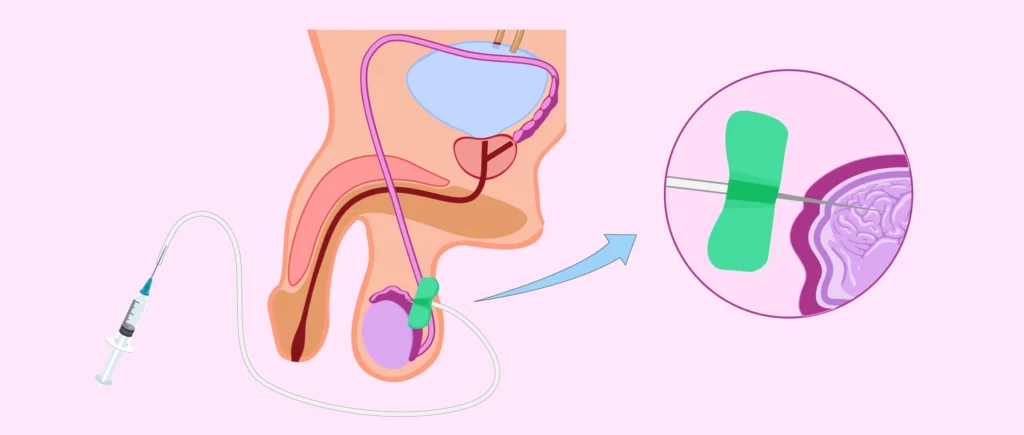
PESA (Percutaneous Epididymal Sperm Aspiration) is a minimally invasive surgical sperm retrieval procedure used in the treatment of male infertility. In this procedure, sperm is aspirated directly from the epididymis—the tube that stores and transports sperm—using a fine needle.
PESA is not a fertility treatment by itself. Instead, it is a diagnostic and retrieval procedure performed when sperm is not present in the semen but is expected to be available in the epididymis. The retrieved sperm is later used for assisted reproductive treatments such as IVF with ICSI.
PESA is recommended when male infertility is caused by obstruction rather than poor sperm production. After fertility evaluation and semen analysis, specialists may suggest PESA to retrieve viable sperm for use in fertility treatment.
PESA is most commonly performed in men with obstructive azoospermia, a condition where sperm production is normal but sperm cannot reach the ejaculate due to a blockage in the reproductive tract.
Men who have undergone a vasectomy or have blockages due to infection, injury, or congenital absence of the vas deferens may require PESA as part of male infertility treatment.
When repeated semen analysis shows no sperm despite normal hormone levels and testicular function, PESA may be advised to retrieve sperm directly from the epididymis.
Before the procedure, a detailed male fertility evaluation is conducted. This may include hormonal testing, ultrasound examination, and review of medical history. The fertility specialist explains the procedure, potential outcomes, and how sperm will be used afterward.
PESA is usually performed as a day-care procedure and does not require hospital admission.
During PESA:
A fine needle is inserted into the epididymis
Fluid containing sperm is gently aspirated
The sample is immediately examined in the laboratory for sperm quality
The procedure is precise and performed under controlled conditions to ensure minimal discomfort.
The PESA procedure typically takes 15–30 minutes and is usually performed under local anesthesia. This allows patient comfort while keeping the procedure minimally invasive.
Most patients experience minimal discomfort during and after PESA. Mild soreness or swelling may occur but usually resolves within a short time. Pain relief medication may be prescribed if needed.
PESA is considered a safe procedure when performed by experienced fertility specialists. Complications are uncommon and usually minor, such as temporary swelling or bruising.
Sperm retrieved through PESA is most commonly used in IVF with ICSI (Intracytoplasmic Sperm Injection). Since sperm quantity may be limited, ICSI allows a single sperm to be injected directly into the egg to achieve fertilisation.
This approach makes PESA an important step in treating certain types of male infertility.
If sufficient sperm is retrieved, it may be cryopreserved (frozen) for future IVF or ICSI cycles. This can help avoid repeat surgical procedures and provides flexibility in treatment planning.
PESA retrieves sperm from the epididymis and is preferred in obstructive azoospermia
TESA retrieves sperm directly from the testis and is usually used when sperm production is reduced
The choice depends on the underlying cause of male infertility.
PESA is minimally invasive and performed with a needle
Micro-TESE is a microsurgical procedure used in complex cases of non-obstructive azoospermia
A fertility specialist determines the most appropriate technique after evaluation.
After PESA:
Short rest is advised
Mild swelling or discomfort may occur
Post-procedure instructions are provided
Most patients recover quickly with minimal restrictions.
Normal daily activities can usually be resumed within 24–48 hours, depending on individual comfort. Heavy physical activity may be avoided for a short period as advised by the specialist.
Before recommending PESA, fertility specialists perform a comprehensive fertility evaluation to confirm the diagnosis and determine whether PESA is the most suitable sperm retrieval option.
Based on evaluation results, a personalised fertility treatment plan is created. This includes explaining how PESA fits into IVF or ICSI treatment and addressing patient concerns with clarity and transparency.

Dr. Shwetha is an expert in reproductive medicine and laparoscopic surgery. She is also a very well qualified Obstetrician and Cosmetic Gynaecologist, capable of handling high risk pregnancies and gynecological issues.
Dr. Shwetha is very passionate about assisted reproductive techniques and she constantly updates herself with the latest techniques. She strictly believes in performing fertility treatments in the most ethical manner by introducing the patients to the most non intrusive stress free treatment. Her treatment and protocols are individualized and customized to each patient; this has proved to be very successful.
We hope that these testimonials will provide you with the confidence and inspiration to trust us with your journey towards parenthood





Fertility challenges affect millions of couples worldwide. For many men, declining sperm quality due to poor lifestyle choices, stress, or

When it comes to family planning, the journey isn’t always straightforward. For couples facing challenges in conceiving, understanding the nuances
PESA (Percutaneous Epididymal Sperm Aspiration) is a minor surgical procedure used to retrieve sperm directly from the epididymis in men with obstructive azoospermia, where sperm cannot be ejaculated naturally.
PESA is recommended for men with obstructive azoospermia due to conditions such as blocked sperm ducts, prior vasectomy, or congenital absence of the vas deferens, after proper fertility evaluation.
PESA usually causes minimal discomfort. The procedure is generally well tolerated, and any mild pain or soreness after the procedure is temporary.
The PESA procedure typically takes about 15 to 30 minutes and is performed as a day-care procedure.
PESA is usually performed under local anesthesia to ensure patient comfort during the procedure.
Sperm retrieved through PESA is used for assisted reproductive treatments such as IVF with ICSI, and may also be frozen for future use if required.
Female Fertility Treatments and Conditions:
Copyright © 2026 Janisthaa Fertility and IVF Center. All Rights Reserved.